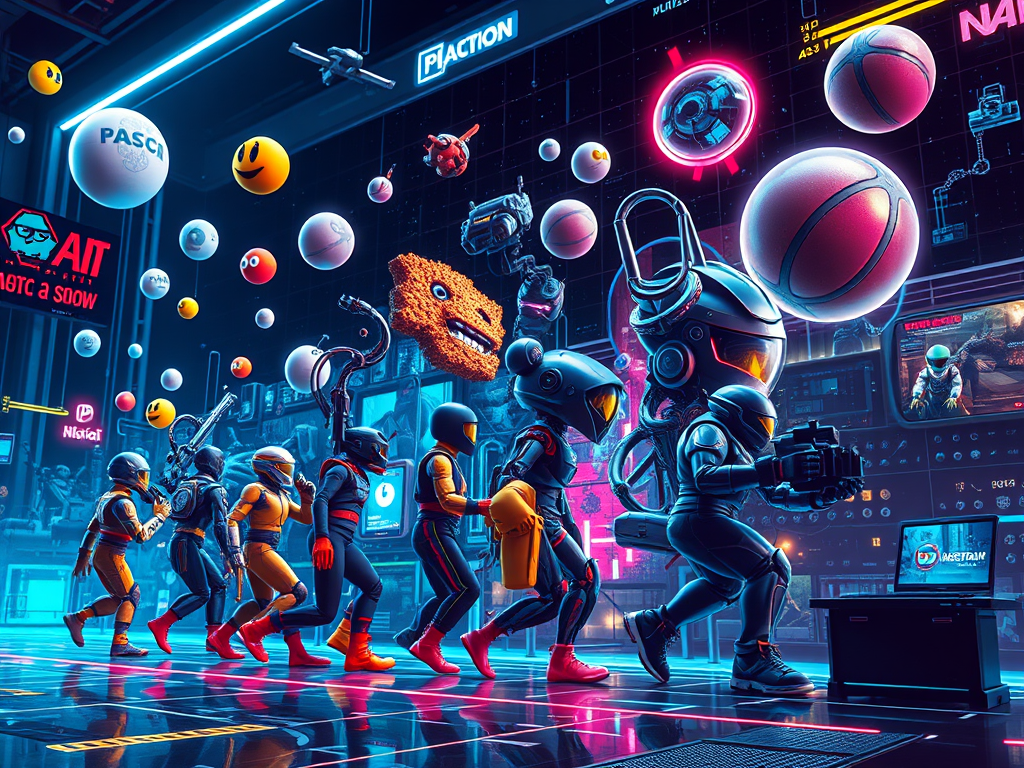
Artificial Intelligence (AI) has played a crucial role in video games since their inception, evolving from basic scripted behaviors to advanced machine learning-driven interactions. This transformation has significantly enhanced gameplay, creating more immersive, challenging, and dynamic experiences for players.
The Early Days: Basic AI in Classic Games
In the early days of gaming, AI was rudimentary, following simple if-then rules. One of the most iconic examples is Pac-Man (1980), where each ghost follows a unique movement pattern, giving the illusion of intelligence. While predictable, these AI behaviors provided engaging challenges that kept players hooked.
Other early arcade games, like Space Invaders (1978) and Donkey Kong (1981), also utilized basic AI mechanics. Enemies moved according to predefined patterns, adjusting difficulty as players progressed. Though primitive by today’s standards, these foundational AI systems laid the groundwork for future advancements.
The 1990s: Smarter Opponents and Pathfinding
As computing power increased, AI became more complex. In the 1990s, real-time strategy (RTS) and first-person shooter (FPS) games began implementing more advanced AI techniques, such as pathfinding algorithms and decision trees.
Games like Warcraft II (1995) and Age of Empires (1997) introduced AI-controlled opponents that could gather resources, build structures, and attack strategically. Meanwhile, FPS games like GoldenEye 007 (1997) featured enemies that reacted to the player’s actions, such as dodging bullets or taking cover.
Pathfinding algorithms, such as A* (A-star), became widely used in this era, allowing AI characters to navigate complex environments more efficiently. This significantly improved gameplay in genres like RTS, RPGs, and shooters.
The 2000s: Adaptive AI and Realistic Behavior
With advancements in processing power, AI in games became more lifelike. Games like F.E.A.R. (2005) introduced AI that adapted to player behavior, using tactics such as flanking, taking cover, and coordinating attacks.
RPGs like The Elder Scrolls IV: Oblivion (2006) implemented AI systems where non-playable characters (NPCs) followed daily routines, interacting dynamically with the game world. This created a more immersive environment where NPCs appeared to have lives beyond player interactions.
Procedural content generation also gained traction, with games like Left 4 Dead (2008) using AI to adjust enemy difficulty dynamically, ensuring each playthrough felt unique and challenging.
Modern AI: Machine Learning, NPC Personalization, and Procedural Worlds
Today, AI in gaming has reached new heights. Machine learning and neural networks allow for more adaptive and realistic behaviors. Some modern AI advancements include:
- Dynamic NPCs: AI-controlled characters in open-world games, such as Red Dead Redemption 2 (2018), react to player choices, emotions, and environments in unprecedented ways.
- Procedural World Generation: Games like No Man’s Sky (2016) use AI-driven procedural generation to create vast, unique planets, making exploration feel limitless.
- AI-Assisted Development: AI tools help developers generate assets, test games, and even create story elements, reducing production time while enhancing creativity.
AI is also improving accessibility in gaming. Features like AI-driven subtitles, voice recognition, and adaptive difficulty settings ensure that more players can enjoy games regardless of skill level or disabilities.
The Future of AI in Gaming
As AI technology continues to evolve, we can expect even more revolutionary changes in gaming. Some anticipated advancements include:
- Fully AI-Generated Games: Future AI systems could create entire games, from world design to quest generation, making infinite replayability a reality.
- Advanced Player Personalization: AI could adapt entire game narratives based on player behavior, creating truly unique experiences.
- Lifelike Virtual Companions: AI-driven characters may develop memories, emotions, and personalities that evolve over time, making interactions feel more human.
Conclusion
AI has come a long way from simple scripted behaviors to complex machine learning systems that shape entire gaming experiences. As technology advances, AI will continue to redefine what’s possible in gaming, making worlds richer, NPCs more realistic, and gameplay more engaging than ever. The next generation of AI-driven gaming is just beginning, and the future looks incredibly exciting.
 Kieren Day Studios
Leave a comment