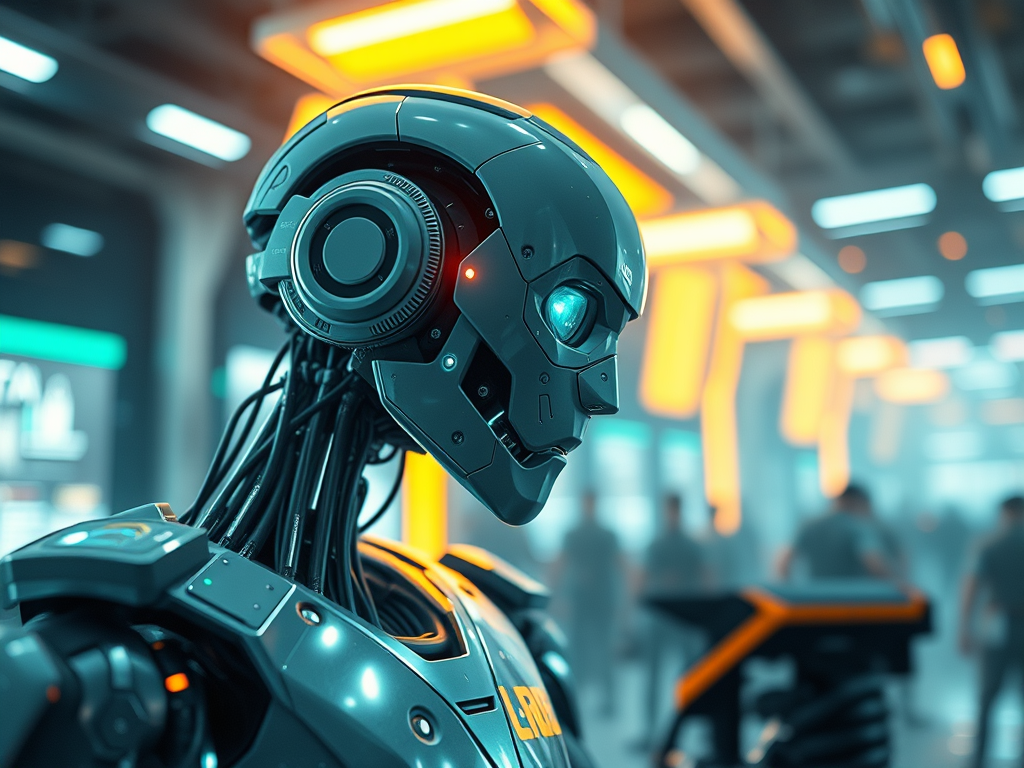
Artificial Intelligence (AI) is reshaping the gaming industry, transforming how developers create, optimize, and innovate video games. From automating tedious tasks to generating entire game worlds, AI-driven tools are making game development faster, more efficient, and more creative than ever before.
AI in Game Development: A Game-Changer
Game development is a complex process involving world-building, character design, animation, level creation, and bug testing. AI has emerged as a powerful ally in many aspects of development, helping developers save time and resources while pushing the boundaries of creativity.
Some of the key areas where AI is making an impact include:
- Procedural Content Generation
- AI-Assisted Game Testing
- AI-Driven NPC Behavior
- Automated Animation & Voice Acting
- AI for Game Balancing & Personalization
Let’s explore how AI is transforming each of these areas.
1. Procedural Content Generation: Creating Infinite Worlds
Procedural Content Generation (PCG) uses AI algorithms to generate environments, levels, and assets dynamically. This technique allows developers to create vast, unique game worlds without manually designing every detail.
Examples:
- No Man’s Sky (2016) uses AI-driven PCG to create an entire universe with billions of unique planets, each featuring different landscapes, creatures, and ecosystems.
- Minecraft (2011) generates infinite terrain using procedural algorithms, ensuring that no two players experience the exact same world.
AI-powered procedural generation reduces development time while keeping gameplay fresh, making it a vital tool for open-world and sandbox-style games.
2. AI-Assisted Game Testing: Finding Bugs Faster
Bug testing is one of the most time-consuming and expensive aspects of game development. AI-driven testing tools help developers detect and fix issues faster than traditional manual testing.
How It Works:
- AI bots play through levels repeatedly, identifying crashes, glitches, and inconsistencies.
- Machine learning algorithms analyze player behavior to detect areas where players struggle or get stuck.
- AI can predict performance issues, ensuring smooth gameplay across different devices.
Companies like Ubisoft and EA use AI-driven testing to reduce development cycles, ensuring polished releases with fewer post-launch patches.
3. AI-Driven NPC Behavior: Smarter Opponents & Allies
In the past, Non-Playable Characters (NPCs) followed scripted behaviors that often felt predictable. Today, AI enables NPCs to react dynamically to player actions, creating more immersive experiences.
Examples:
- The Last of Us Part II (2020) features AI-driven enemies that communicate, adapt, and use tactics against the player.
- Alien: Isolation (2014) uses an advanced AI system to control the Xenomorph, making it an unpredictable and terrifying opponent.
Future advancements could lead to AI-powered NPCs with evolving personalities and memories, creating deeper player interactions.
4. Automated Animation & Voice Acting: AI Bringing Characters to Life
Traditionally, animating characters and recording voice lines required extensive time and human effort. AI-powered animation and voice synthesis tools are streamlining these processes.
AI Innovations:
- AI-generated facial animations synchronize lip movements with dialogue, reducing manual animation work.
- AI voice synthesis can create realistic voice acting without the need for human actors.
- Machine learning can enhance motion capture, making character animations more fluid and realistic.
Example: Hellblade: Senua’s Sacrifice (2017) used AI-assisted motion capture to bring Senua’s expressions to life, enhancing emotional depth.
5. AI for Game Balancing & Personalization
AI-driven analytics help developers fine-tune gameplay by analyzing player data. This ensures that games remain challenging, rewarding, and engaging for all types of players.
How AI Helps:
- Adaptive Difficulty: Games like Resident Evil 4 (2005) adjust enemy behavior based on player performance.
- Personalized Content: AI tailors quests, rewards, and in-game events based on player choices.
- Game Economy Balancing: AI helps maintain fair in-game economies in online multiplayer games.
With AI-driven personalization, every player’s experience can be unique, increasing engagement and replayability.
The Future of AI in Game Development
As AI technology advances, its role in game development will continue to expand. Some future possibilities include:
- Fully AI-Generated Games: AI could create entire games, from storylines to mechanics, with minimal human input.
- Evolving NPCs: AI-driven characters may learn from players over time, creating deeper and more meaningful interactions.
- AI as a Co-Developer: AI could assist human developers in brainstorming ideas, writing dialogue, and even designing levels.
Conclusion
AI is revolutionizing game development, making it more efficient, creative, and immersive. From procedural content generation to intelligent NPCs and automated testing, AI is shaping the future of gaming in exciting ways. As AI technology continues to evolve, developers will have even more powerful tools at their disposal, leading to richer, more dynamic gaming experiences for players worldwide.
 Kieren Day Studios
Leave a comment